When Video Loom fits
Use Video Loom when the workflow needs a broader production system around the video: storyboards, providers, continuity, comments, takes, and timeline export.
 Video Loom
Comparison
Neural Frames is known for AI animation and frame-by-frame music-video control. Video Loom focuses on multi-provider production orchestration from source to final cut.
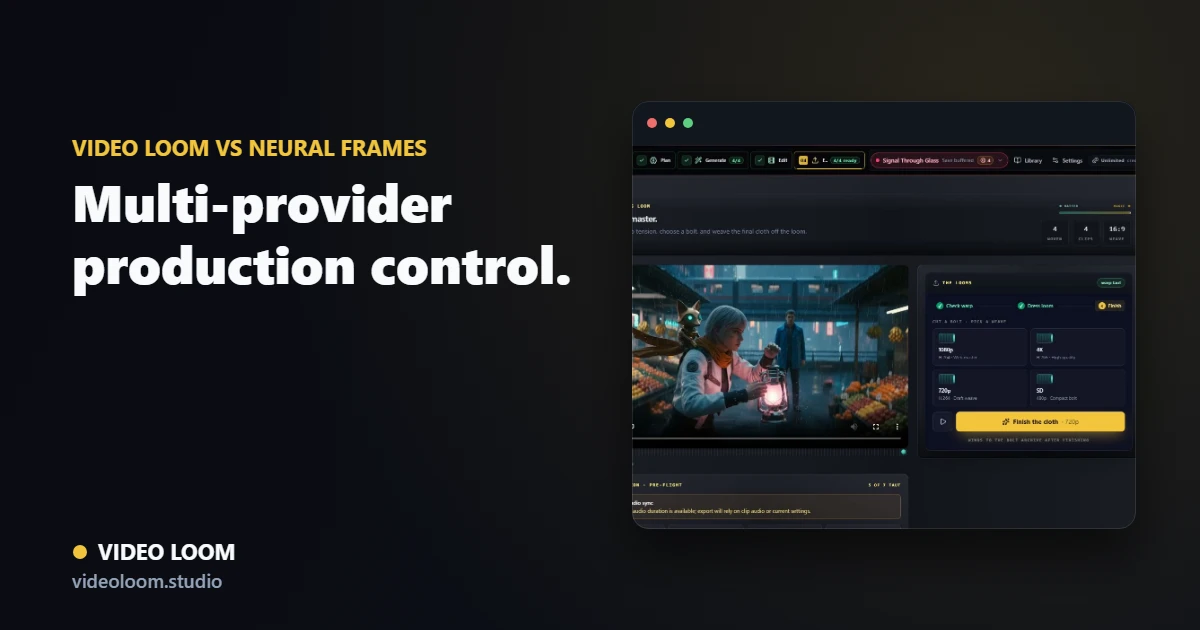
Use Video Loom when the workflow needs a broader production system around the video: storyboards, providers, continuity, comments, takes, and timeline export.
Use a frame-focused animation workflow when the main requirement is deep control over animation timing and audio-reactive visual changes.
Video Loom emphasizes the project container around AI video generation, helping teams coordinate assets, prompts, references, providers, and edits.
Production path
Video Loom connects planning, generation, review, and finishing so AI video work behaves like a production workflow.
Workflow fit
Video Loom and frame-focused tools can serve different parts of AI music-video creation. Video Loom is oriented around multi-scene production management.
| Decision | Video Loom | Frame-focused AI animation workflow |
|---|---|---|
| Best fit | Scene-based productions that need provider routing, continuity, review, and export. | Frame-by-frame or audio-reactive animation control for music visuals. |
| Continuity model | Project-level cast, environment, reference, and source-media continuity. | Strong visual timing control, with continuity handled by that workflow's own tools. |
| Provider strategy | Designed to coordinate multiple configured cloud and hosted providers. | Typically centered on the platform's animation and rendering workflow. |
Questions
Yes. It can plan and route animated or stylized scenes, while keeping the project state and final assembly together.
Use it when the job needs production organization across scenes, providers, references, review, and export rather than only clip or frame generation.