When Video Loom fits
Use Video Loom when the deliverable needs a structured storyboard, client review, continuity management, generated takes, and a final edit timeline.
 Video Loom
Comparison
Kaiber is known for music-video and social-first AI visuals. Video Loom focuses on production control for teams that need scene planning, continuity, provider routing, and finishing.
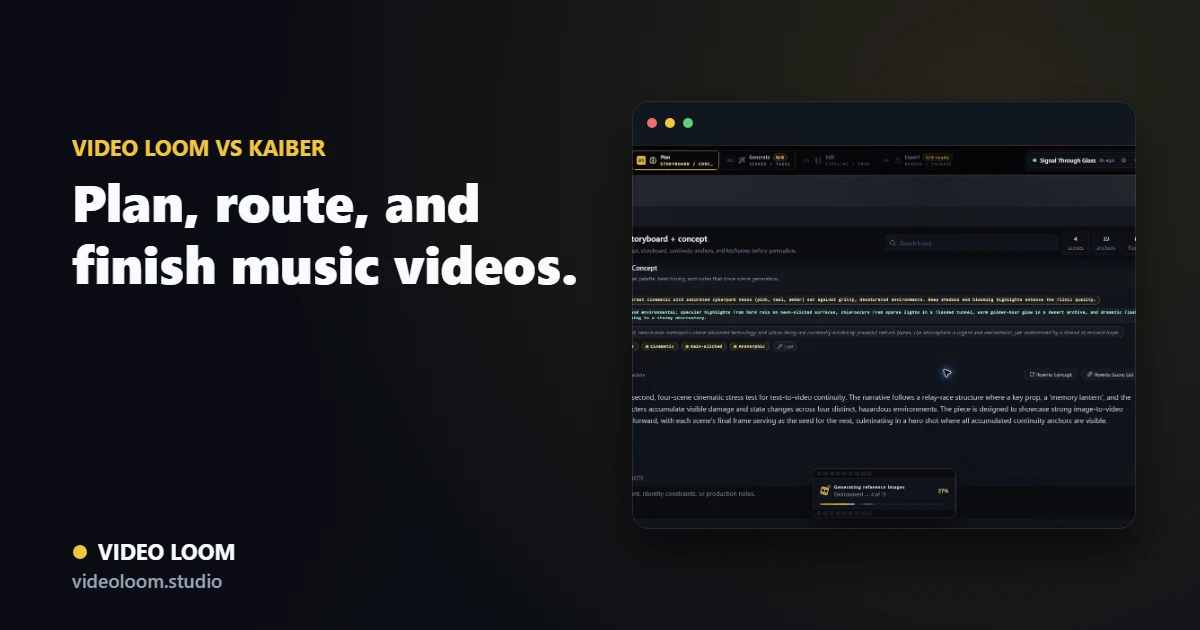
Use Video Loom when the deliverable needs a structured storyboard, client review, continuity management, generated takes, and a final edit timeline.
Use a music-first generator when the priority is quick audio-reactive visuals or social-first experimentation around a track.
Video Loom treats the song as the beginning of production, not the whole workflow. Scenes, references, providers, and exports remain connected.
Production path
Video Loom connects planning, generation, review, and finishing so AI video work behaves like a production workflow.
Workflow fit
Both workflows can support AI music visuals. The distinction is whether the main requirement is quick audio-reactive generation or production orchestration.
| Decision | Video Loom | Kaiber-style music-first generator |
|---|---|---|
| Best fit | Professional multi-scene planning, continuity, review, and export workflows. | Fast music-video and social-first visual generation around a song or prompt. |
| Storyboard depth | Scene-by-scene plans with prompts, timing, references, and provider choices. | Optimized around rapid creative generation and audio-reactive output. |
| Finishing workflow | Generated clips and source media move into timeline assembly and review packages. | Strong for creating music visuals, with finishing needs varying by project. |
Questions
No. It is built for video teams, directors, editors, and creators who need production control around music or other source media.
Yes, but the strongest fit is work that benefits from planning, continuity, revisions, and final assembly.